
About the Author
Sawera is the home cook behind Sawera Cooking, a food blog built on the belief that restaurant-quality food belongs in every home kitchen. This crispy fried chicken breast recipe is one she has made dozens of times for her family — and the one her kids ask for most by name.
What Is Crispy Pan-Fried Chicken Breast?
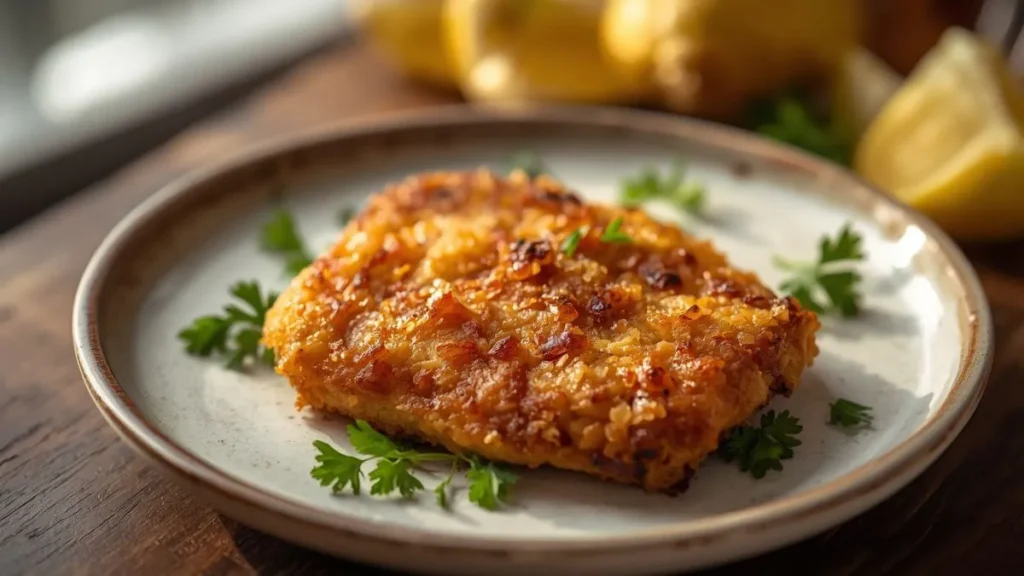
Crispy pan-fried chicken breast is a boneless, skinless chicken breast that is scored, coated in a Parmesan egg crust, and shallow-fried in a skillet with oil and butter until deeply golden on both sides. The result is a juicy interior locked inside a shatteringly crisp exterior — achieved in about 30 minutes without a deep fryer.
This is not your average fried boneless chicken breast recipe. The scoring technique borrowed from restaurant kitchens allows heat to penetrate the thickest part of the meat fast, cutting total frying time to roughly 10 minutes while keeping every bite moist. Home cooks only need a skillet, basic pantry staples, and a sharp knife.
Why This Crispy Fried Chicken Breast Recipe Works
This recipe succeeds where most home attempts fail because it solves three specific problems at once: uneven cooking, a soggy crust, and dry meat. The deep cross-hatch scoring opens the meat so heat travels evenly to the center. The Parmesan egg coating acts as a moisture-sealing barrier that also fries crispier than plain flour alone. Cooking at medium — not medium-high — heat prevents the outside from browning before the inside is done.
Here is what makes this pan fried chicken breast different from the competition:
- Scoring: Half-inch cross-hatch cuts allow heat to reach the thickest part quickly, reducing frying time and eliminating the dry-outside-raw-inside problem that plagues most home cooks
- Parmesan egg coating: The cheese browns and crisps in the pan fat, locking in moisture better than breadcrumbs alone
- Medium heat discipline: The most common mistake is cooking on medium-high; the outside chars before the center reaches 165°F (74°C)
- Wire rack draining: Paper towels trap steam and turn a crispy crust soggy within minutes; a rack keeps air circulating underneath
If you love bold chicken dishes, you might also enjoy this Easy Chicken Laredo Recipe — another weeknight favorite with serious flavor.
Ingredients for Pan-Fried Chicken Breast
The complete list for 4 servings (8 cutlets total):
Chicken and Base
- 4 boneless, skinless chicken breasts
- 2–3 garlic cloves, smashed or minced
Seasonings
- ¾ tsp salt, plus more to taste
- ½ tsp black pepper
- 1 tsp Dijon mustard (optional but recommended)
- 3 tbsp sour cream or Greek yogurt (optional — adds tenderness)
Breading Mixture
- 2 cups all-purpose flour
- 2 tsp garlic powder
- 2 tsp onion powder
- 5 large eggs
- 4 oz freshly grated Parmesan cheese (approx. ¾ cup)
- 2 tsp parsley, dried or fresh
- ½ tsp salt
Cooking Fat
- ½ cup vegetable oil (or canola, sunflower, avocado oil)
- ¼ cup (4 tbsp) unsalted butter
Why fresh Parmesan matters: Pre-grated Parmesan contains anti-caking agents that prevent it from melting smoothly into the crust. Freshly grated cheese fuses with the egg to create a superior golden crust with better flavor and crunch.
Why to avoid olive oil: Olive oil has a smoke point of approximately 375°F (190°C), which is too low for pan frying at the temperatures needed for a properly golden crust. Vegetable oil, canola oil, and avocado oil all have smoke points above 400°F (204°C), making them safe choices that will not impart a bitter flavor.
How to Fry Chicken Breast in a Pan with Oil — Step by Step
Step 1: Prepare and Score the Chicken
Pat the chicken completely dry, score it in a cross-hatch pattern, pound it flat, and season it before anything else. This is the most important stage of the entire recipe.
Begin by patting every chicken breast thoroughly dry with paper towels. Even a small amount of surface moisture prevents the breading from adhering properly. Lay the breasts shiny-side down on a cutting board and slice each one horizontally through the middle to create two equal cutlets — 8 pieces total from 4 breasts.
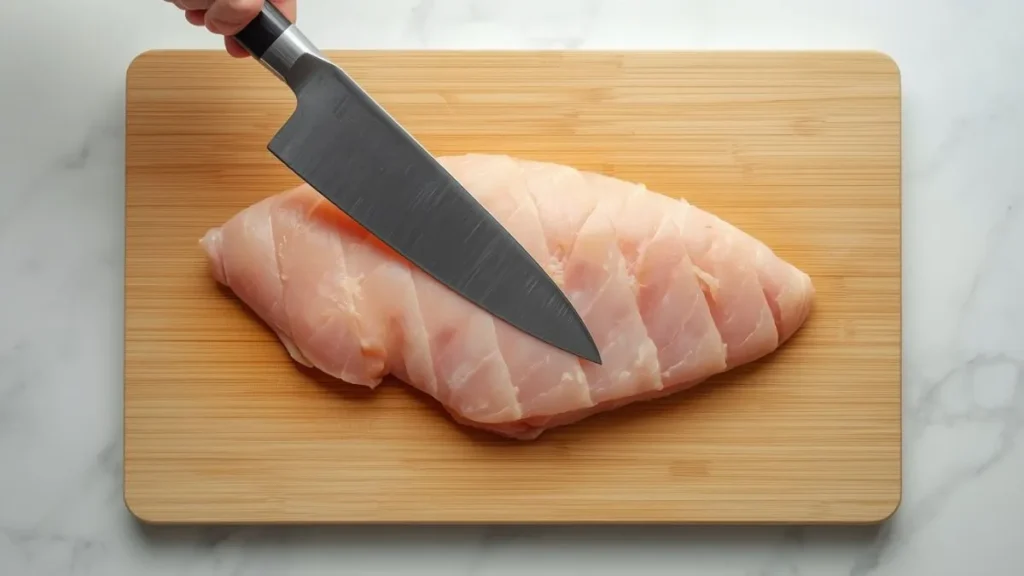
Using a sharp knife, score each cutlet in a cross-hatch pattern with cuts approximately half an inch deep running top-to-bottom and side-to-side. This is the restaurant trick that makes it possible to fry full chicken breasts quickly without drying them out. The scoring opens channels for heat to travel directly into the densest part of the meat.
Cover the scored cutlets with plastic wrap and pound gently with a meat mallet or rolling pin until the thickness is uniform throughout. Even thickness is what guarantees every piece finishes cooking at the exact same time. Transfer to a large bowl, add smashed garlic, salt, and black pepper, and mix to coat.
Optional marination (strongly recommended): Whisk together the Dijon mustard and sour cream and rub the mixture into every scored crevice. Cover and refrigerate for 15 minutes. Sour cream and mustard work as a quick tenderizer — the acidity in both ingredients begins to break down protein fibers, which is why even 15 minutes makes a noticeable difference in texture and flavor depth. Greek yogurt is a direct substitute for sour cream.
One more important tip before moving to breading: let the chicken come to room temperature during those 15 minutes of marination. Cold chicken hitting hot oil drops the pan temperature and leads to uneven cooking.
Step 2: Set Up the Breading Station
Organize two shallow bowls — one for seasoned flour, one for Parmesan egg wash — plus a flour-dusted holding tray. Having everything in place before the first piece is breaded keeps the process clean and fast.
In the first shallow bowl, combine the all-purpose flour with garlic powder and onion powder and whisk to distribute evenly. In the second shallow bowl, crack the eggs, add the freshly grated Parmesan, parsley, and a pinch of salt, and whisk until well combined. Dust a large tray or clean surface with a thin layer of plain flour to hold the finished pieces without sticking.
Tip for cleaner hands: Use one hand exclusively for dry ingredients (flour bowl) and the other exclusively for wet (egg bowl). This prevents the breading from clumping on your fingers and wasting coating.
Step 3: Bread the Chicken (Simple Fried Chicken Breast Recipe Method)
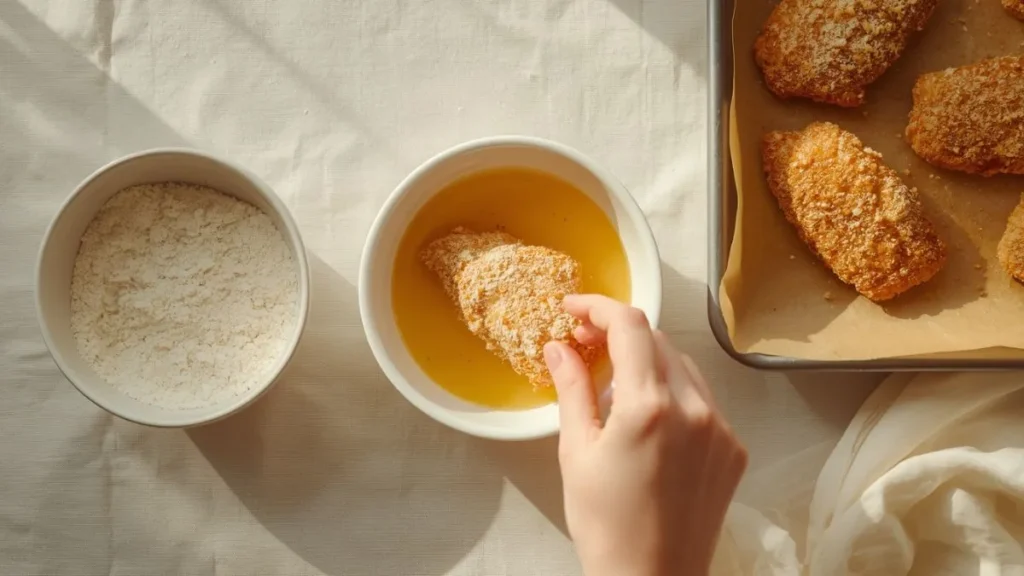
Press each cutlet firmly into the flour, dip fully in the Parmesan egg wash, then press back into flour to build texture clumps. Those irregular clumps become the craggy, crunchy peaks of the finished crust.
Working one piece at a time: press the cutlet into the seasoned flour and coat every surface thoroughly, then shake off the heavy excess. Transfer to the egg-and-Parmesan bowl and turn to coat completely — every millimeter of surface should be covered. Return to the flour and press firmly so small clumps form. These clumps are intentional; they create the uneven, restaurant-style crust texture.
Lay each breaded cutlet in a single layer on the flour-dusted tray. Do not stack. Allow the breaded chicken to rest for a full 5 minutes before it goes into the pan. This resting time lets the coating bond to the surface — skipping it is one of the most common reasons breading slides off during frying.
Step 4: How to Fry Chicken Breast in a Pan — The Frying Method
Heat oil and butter together over medium heat, fry each batch for approximately 5 minutes per side undisturbed, and always rest finished pieces on a wire rack.
Set up a wire rack over a parchment-lined baking sheet before you begin — the chicken goes directly here after frying, never on paper towels.
Heat a large skillet or cast iron pan over medium heat. Add 4 tablespoons of vegetable oil and 2 tablespoons of butter. Medium heat is non-negotiable for this recipe. Medium-high produces a beautiful golden exterior that conceals an undercooked center; medium gives the interior time to cook through while the crust develops properly. Allow the fat to heat for 30 to 60 seconds, then test by sprinkling a small pinch of flour into the oil — it should sizzle immediately and steadily.
Add 3 to 4 cutlets to the pan. Do not move them. The coating needs uninterrupted contact with the hot fat to set into a crust. Moving the chicken in those first crucial minutes tears the breading off. Fry for approximately 5 minutes, then carefully lift one edge to check the color — it should be a deep, even golden brown. Flip and cook another 5 minutes on the second side.
The chicken is done when an instant-read thermometer inserted into the thickest part reads 165°F (74°C). When sliced, juices should run clear, and the meat should be white throughout with no pink remaining.
Transfer the cooked cutlets to the wire rack. Do not turn off the heat between batches — the sudden temperature drop as you add new chicken to a cold pan creates steam, which softens the crust before it sets.
For the second batch, add another 4 tablespoons of oil and 2 tablespoons of butter. Because the pan is already fully heated, the second batch cooks approximately 4 minutes per side rather than 5.
Step 5: Finishing Touches
While the chicken is still hot on the wire rack, add a final flourish of freshly grated Parmesan and a light pinch of flaked sea salt.
The residual heat from the freshly fried chicken will cause the Parmesan to soften slightly against the crust, adding an extra savory layer. A scatter of fresh parsley or cilantro adds color and a clean herby note. Allow the chicken to rest for 2 to 3 minutes before serving — the interior juices redistribute during this brief rest, keeping every bite as moist as possible.
How Do You Know When Fried Chicken Breast Is Done?
Fried chicken breast is done when both sides are deep golden brown and an instant-read thermometer reads 165°F (74°C) in the thickest part. Visual cues alone are not reliable because a crust can brown faster than the interior cooks — especially on thicker pieces. A thermometer removes all guesswork. Sliced, the meat should be white throughout with clear-running juices and no translucent or pink areas.
Because these cutlets are thin and scored, they cook through far faster than whole unscored breasts. The 5-minute-per-side timing is a guide; always verify with temperature rather than time alone.
Southern Fried Boneless Skinless Chicken Breast vs. Pan Fried — What’s the Difference?
Traditional Southern fried boneless skinless chicken breast uses a seasoned buttermilk soak, a heavily spiced flour dredge, and deep frying in 350°F oil — typically producing a thicker, crunchier crust with a distinctly tangy flavor from the buttermilk. This pan-fried version uses a Parmesan egg coating and shallow frying with a butter-oil blend, which produces a more refined, cheese-forward crust with less oil absorption and a shorter cook time.
Both methods produce juicy, golden chicken breast — the choice comes down to crust style (thick and spiced vs. thin and cheesy) and available equipment. If you enjoy experimenting with global chicken preparations, the Best Chicken Bibimbap recipe on Sawera Cooking shows how different cooking methods transform the same cut entirely.
Serving Suggestions for Pan-Fried Chicken Breast with Sauce
Crispy fried chicken breast is one of the most versatile proteins in a home cook’s repertoire. Here are the best ways to serve it:
Simple: Serve hot off the wire rack with a squeeze of fresh lemon juice and a dipping sauce — garlic aioli, honey mustard, tartar sauce, or a homemade sweet and sour sauce all work beautifully alongside the Parmesan crust.
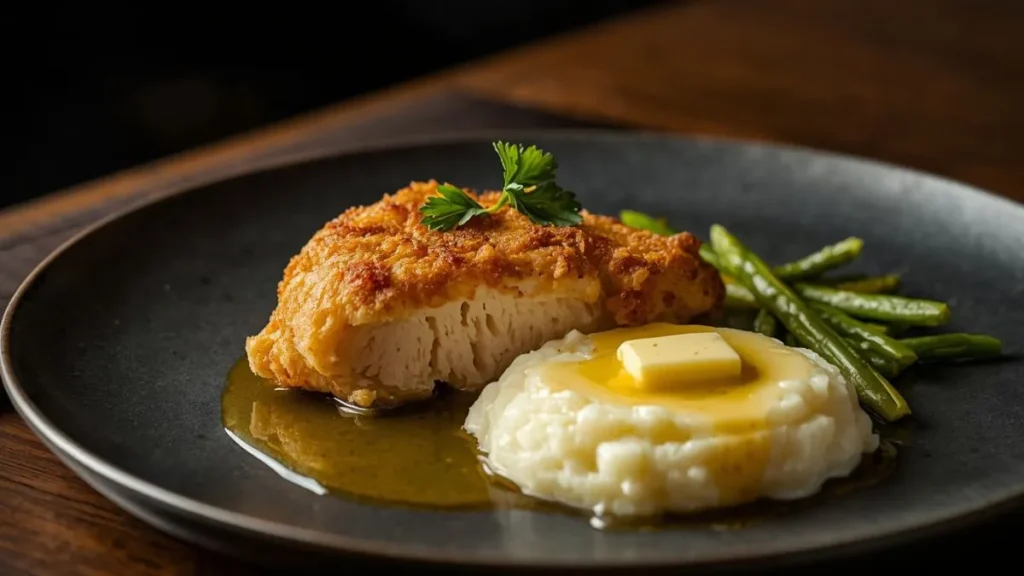
Classic dinner: Pair with creamy mashed potatoes and roasted green beans or a simple dressed salad. The richness of the chicken crust pairs well with acidic or light sides.
Sandwich or wrap: Slice the cutlet and layer it on a toasted brioche bun with lettuce, sliced tomato, and your preferred sauce for a restaurant-quality crispy chicken sandwich at home.
Over pasta: Lay a whole cutlet over pasta tossed in garlic butter cream sauce, Cajun Alfredo, or a simple tomato cream. The crispy crust holds up well against saucy bases. For a bold pairing, try it alongside the flavors in this Jamaican Jerk Chicken Pasta for inspiration.
Party platter: Arrange cutlets on a board with four or five dipping sauces — this presentation works exceptionally well as a game-day appetizer or casual gathering centerpiece.
Fried Chicken Breast Recipe KFC-Style Variation
KFC’s signature flavor comes from a blend of 11 herbs and spices in the coating, a pressure-frying method, and a double-dredge in seasoned flour. To get a KFC-inspired result at home using this pan-fry method, add the following to the flour mixture: 1 tsp paprika, ½ tsp cayenne, ½ tsp dried thyme, ½ tsp dried basil, and ½ tsp dried oregano. Double-dredge by passing the chicken through the flour-egg-flour sequence twice before frying. The Parmesan egg wash in this recipe replaces the buttermilk soak and keeps the process simple while delivering a comparably bold crust.
Recipe Variations
Spicy fried chicken breast: Add ½ to 1 tsp cayenne pepper to the flour mixture and a few dashes of hot sauce to the egg wash.
Cajun fried chicken breast: Replace the garlic and onion powder with a tablespoon of Cajun seasoning blend. Pairs particularly well with this Easy Chicken Laredo Recipe approach to bold seasoning.
Extra crunchy panko crust: After the egg wash, press the cutlet into panko breadcrumbs as a final coating before the second flour press. Panko’s larger, drier flakes create an exceptionally airy, extra-crunchy exterior.
Air fryer version: Bread as directed, then air fry at 400°F for 12–15 minutes, flipping halfway through. Spray lightly with cooking oil before cooking.
Oven baked version: Place breaded cutlets on a wire rack set over a baking sheet and bake at 425°F (220°C) for 20–25 minutes until golden and cooked through.
Chicken bites: Cut breasts into 1-inch cubes before scoring and breading for crispy appetizer bites — ideal as a party snack or protein topper for salads. Great alongside the Gluten Free Chicken Salad for a complete meal.
Storage and Reheating
Store cooled leftover fried chicken breast in an airtight container in the refrigerator for up to 4 days. The key rule for reheating: avoid the microwave entirely. Microwave steam turns a crispy crust soft and rubbery within 60 seconds.
Best reheating methods:
- Oven: 350°F (175°C) for 10–15 minutes on a wire rack — restores most of the original crunch
- Air fryer: 375°F for 5–7 minutes — fastest method and closest to fresh-fried texture
- Skillet: Medium heat with a tiny amount of butter, 2–3 minutes per side — excellent for reviving the crust flavor
Do not freeze already-fried chicken; freezing and thawing causes the coating to separate from the meat. If you want to freeze, bread the cutlets and freeze them raw and uncooked, then fry directly from frozen at slightly reduced heat.
[C6] FAQ Section
Q1: What is the best oil for frying chicken breast in a pan?
The best oils for pan frying chicken breast are those with high smoke points above 400°F (204°C): vegetable oil, canola oil, sunflower oil, peanut oil, and avocado oil. Avoid olive oil entirely — its lower smoke point causes it to burn at frying temperatures, producing a bitter flavor and unhealthy compounds in the oil.
Q2: How do I keep fried chicken breast juicy and not dry?
Three techniques prevent dry fried chicken breast: first, score the meat in a deep cross-hatch pattern so heat travels evenly to the center without overcooking the exterior; second, use the Parmesan egg coating as a moisture-sealing barrier; third, pull the chicken off heat the moment it hits 165°F (74°C) internally. Overcooking by even 2–3 minutes is the leading cause of dry chicken breast.
Q3: Why does my breading fall off when frying chicken?
Breading falls off for three reasons: the chicken was not dried properly before breading, the coated chicken was not rested for at least 5 minutes before hitting the oil, or the oil was not hot enough when the chicken was added. A properly preheated pan sets the coating on contact — cold oil causes the breading to absorb fat slowly and then slide off.
Q4: Can I make crispy fried chicken breast without deep frying?
Yes. This recipe is specifically designed for shallow pan frying with only ½ cup of oil — no deep fryer required. An air fryer is another excellent option: bread the chicken as directed and cook at 400°F for 12–15 minutes, flipping halfway through. Both methods deliver a golden, crispy result.
Q5: How long does it take to fry a chicken breast in a pan?
Scored, pounded boneless chicken breast cutlets take approximately 5 minutes per side on medium heat for the first batch and 4 minutes per side for the second batch (since the pan is already fully heated). Total active frying time is about 10 minutes. Always verify doneness with a meat thermometer reading 165°F (74°C).
Q6: Should I use a meat thermometer for pan-fried chicken breast?
Yes, a meat thermometer is strongly recommended. Visual cues like golden-brown color can be misleading — a crust can look perfectly done while the center is still undercooked, especially on thicker pieces. An instant-read thermometer inserted into the thickest part removes all guesswork and guarantees safe, juicy chicken every time.
Q7: What is the scoring method for fried chicken breast?
Scoring means making shallow cuts about half an inch deep across the surface of the chicken breast in a cross-hatch (diamond) pattern using a sharp knife. These cuts allow heat to penetrate directly into the thickest part of the meat during frying, enabling full, even cooking in a fraction of the time required for unscored breasts — without drying out the exterior.
Crispy Fried Chicken Breast
Pan Fried, Juicy & Golden
- Large skillet or cast iron pan
- Wire rack + baking sheet
- Meat mallet or rolling pin
- Sharp knife
- 2 shallow bowls
- Instant-read thermometer
- Plastic wrap
- Paper towels
Pat chicken completely dry with paper towels. Slice each breast horizontally to create 2 cutlets (8 total). Score each cutlet in a deep cross-hatch pattern — cuts ~½ inch deep, top-to-bottom and side-to-side. Cover with plastic wrap and pound to even thickness. Transfer to a bowl; toss with garlic, salt, and pepper. Optionally rub with Dijon mustard mixed with sour cream. Refrigerate 15 minutes.
Bowl 1: Whisk flour with garlic powder and onion powder. Bowl 2: Whisk eggs with grated Parmesan, parsley, and salt. Dust a large tray or clean surface with plain flour as a holding station for breaded pieces.
Use one hand for dry, one hand for wet. Press a cutlet into seasoned flour → shake off excess → dip fully in Parmesan egg wash → press back into flour to form crust clumps. Lay in a single layer on the floured tray. Rest breaded pieces 5 full minutes before frying — this step prevents breading from falling off.
Set up wire rack over a lined baking sheet. Heat 4 tbsp oil + 2 tbsp butter in a large skillet over medium heat (not medium-high). Test with a flour pinch — it should sizzle steadily. Add 3–4 pieces; do NOT move them. Fry 5 minutes, check color, flip, fry 5 more minutes. Internal temp must reach 165°F (74°C). Move to wire rack (never paper towels). Repeat with remaining oil, butter, and chicken — second batch takes ~4 min per side.
While still hot on the rack, optionally top with fresh Parmesan and flaked sea salt. Garnish with fresh parsley or cilantro. Rest 2–3 minutes before serving so juices redistribute. Serve with your choice of dipping sauce, over pasta, in a sandwich, or alongside mashed potatoes.
- Always use freshly grated Parmesan — pre-grated contains anti-caking agents that prevent proper crust formation
- Medium heat is non-negotiable — medium-high chars the outside before the center cooks through
- Never move the chicken during those first crucial frying minutes — the crust needs undisturbed contact to set
- Always drain on a wire rack, never paper towels — paper traps steam and softens the crust
- Let chicken reach room temperature during the 15-min marination — cold chicken drops oil temperature and causes uneven cooking
- Scoring is essential — it allows heat to penetrate the thickest part quickly and lets marinade reach deep into the meat
- For reheating: oven at 350°F for 10–15 min or air fryer at 375°F for 5–7 min — never microwave
Add ½–1 tsp cayenne + paprika, dried thyme, basil, and oregano to the flour. Double-dredge for a thicker, spiced crust.
Replace garlic and onion powder with 1 tbsp Cajun seasoning blend for a bold, smoky Southern flavor.
Bread as directed, spray lightly with cooking oil, air fry at 400°F for 12–15 minutes, flipping once halfway through.
After the egg wash, press into panko breadcrumbs as a final coating layer before the second flour press for maximum crunch.
*Nutritional values are estimates and may vary based on ingredients used.